

Brand Guidelines: What Should Actually Be Included?
Your brand has to survive real use
It's the main thing everyone forgets about when they're creating a brand.
It doesn’t live in a presentation, instead it lives in the real world.
It gets used in tenders for jobs, letter heads, social posts, website pages, sales decks, ads, documents, signage, uniforms, templates, pitch decks and whatever someone needs to urgently put together before 4pm.
That’s where brands start going in different directions. And its not usually because people are careless.
Someone grabs an old logo file. Someone uses a slightly wrong blue. Someone stretches your logo in Canva. Someone makes a post that looks close enough, but not quite right. A contractor gets the files and interprets your brand in their own way. Over time, your brand starts to look like several slightly different businesses wearing the same name badge.
That’s what brand guidelines are meant to stop.
They’re not there to make your brand look official. They’re there to make your brand usable.
A good set of brand guidelines helps your team, contractors and partners understand how your brand should look and feel when it’s actually being used. Not in the perfect mockup. Not in the launch presentation. In the day-to-day mess where most brand consistency gets lost.
So, what are brand guidelines?
Simply put: Brand guidelines tell people how to use your brand. Think of them as rules.
They explain what your brand should look like, sound like and feel like across the places your customers actually see it.
That usually means rules for logos, colours, fonts, imagery, layout, tone, messaging, templates and common applications.
The goal isn’t to control every tiny creative decision. It's instead to stop people recreating the brand from scratch every time they need something.
Without guidelines, everyone starts making the small calls on their own. And it's not usually because they want to, but because they need to get the job done asap.
One person chooses a font because it “looks similar", another uses a different logo file because it was the first one they found, or someone builds a pitch in PowerPoint using colours that are slightly off.
The brand gets pulled in five directions, and nobody really notices until the whole thing feels messy.
That’s why guidelines are 100% necessary for keeping brand tidy.
If someone needs to make a document, update a slide, brief a contractor, design a social post, or build a landing page, they or you shouldn’t have to guess how your brand needs behave.
The basics every brand guide should include
Your brand guide doesn’t need to be this huge scary document. But it does need to answer the questions people run into when they’re actually using the brand.
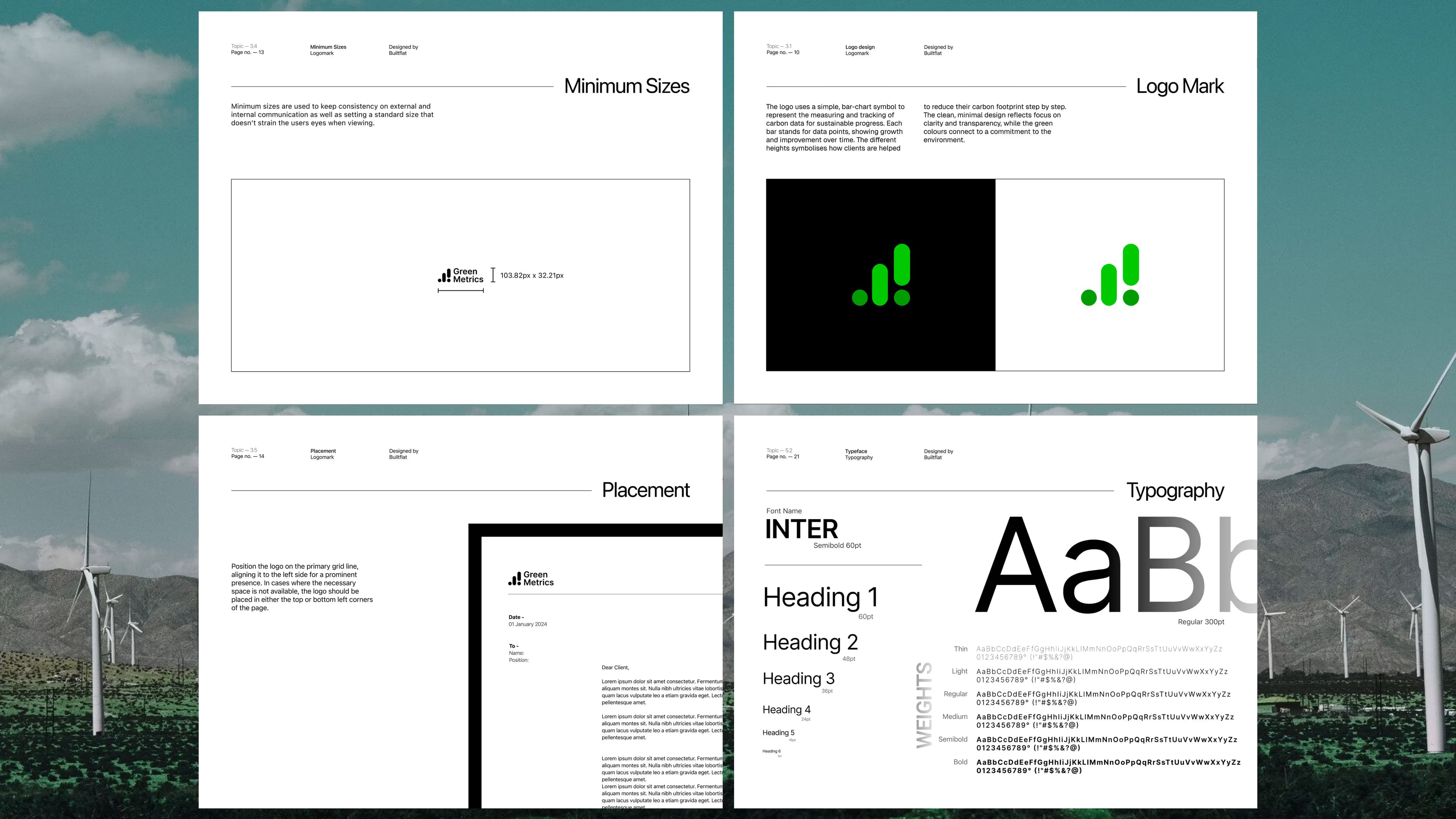
Logo usage
This section tells people how to use your logo without ruining it.
It'll show the main logo, secondary versions, icon or mark-only versions, horizontal and stacked versions, and any approved one-colour options. It should also explain which version to use in different situations.
For example, the logo you use on your website header may not be the same version you use on a dark background, a social profile, a uniform, or a small sponsor panel.
This section should also cover:
- clear space around the logo
- minimum sizing
- approved background colours
- when to use full colour, black, white or single-colour versions
- incorrect usage, like stretching, recolouring, rotating, adding shadows or placing it on messy backgrounds
It's basic, but the logo is usually the first thing people misuse.
Colour palette
Your colour palette should tell people which colours belong to your brand and how to use them.
And it's not just “here are five colours, use them”.
A useful colour section should show your primary colours, secondary colours, accent colours and neutral colours. It should also include the actual colour values people need, like HEX for websites, RGB for digital use, and CMYK or Pantone where you need physical print.
The important part is hierarchy.
People need to know which colours carry your brand, which ones support it, and which ones should be rarely used.
This section should also cover readability. Some colours might look good as a background, but not work at all when used behind text. If your team keeps using brand colours in ways that make things hard to read, the guidelines need to stop that.
Typography
Typography is your font system.
This section should tell people which fonts to use for headings, body copy, buttons, captions, presentations, documents and digital layouts.
It should also explain fallbacks. Not every platform or team member will have access to the main brand font. If someone opens a sales deck and the font gets replaced by Arial or Calibri the whole thing can start looking different pretty quickly.
Good typography rules should cover:
- primary heading font
- body font
- accent or display font, if used
- font weights
- spacing or hierarchy
- web-safe or system fallbacks
- examples of correct use
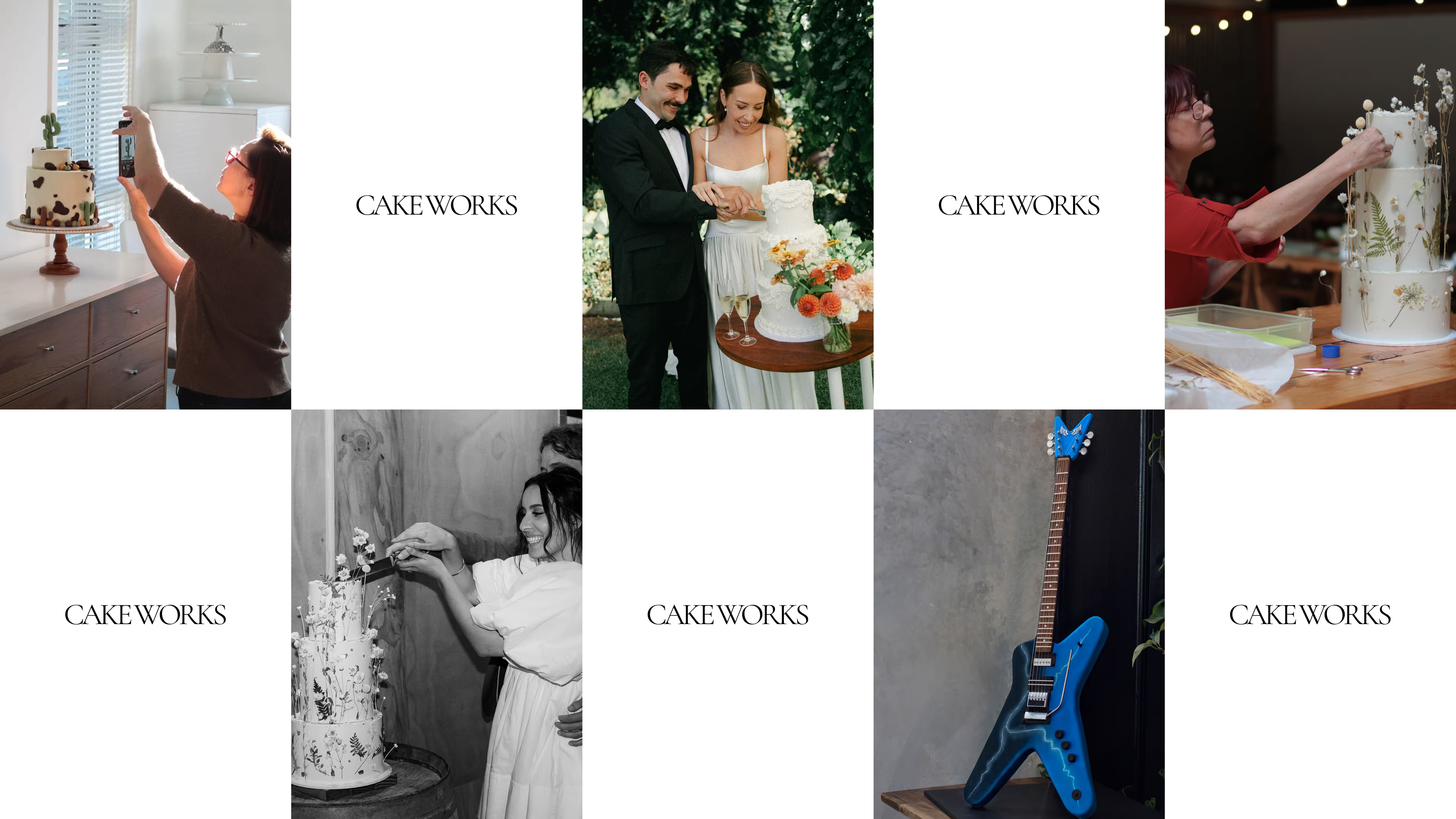
Imagery and graphic style
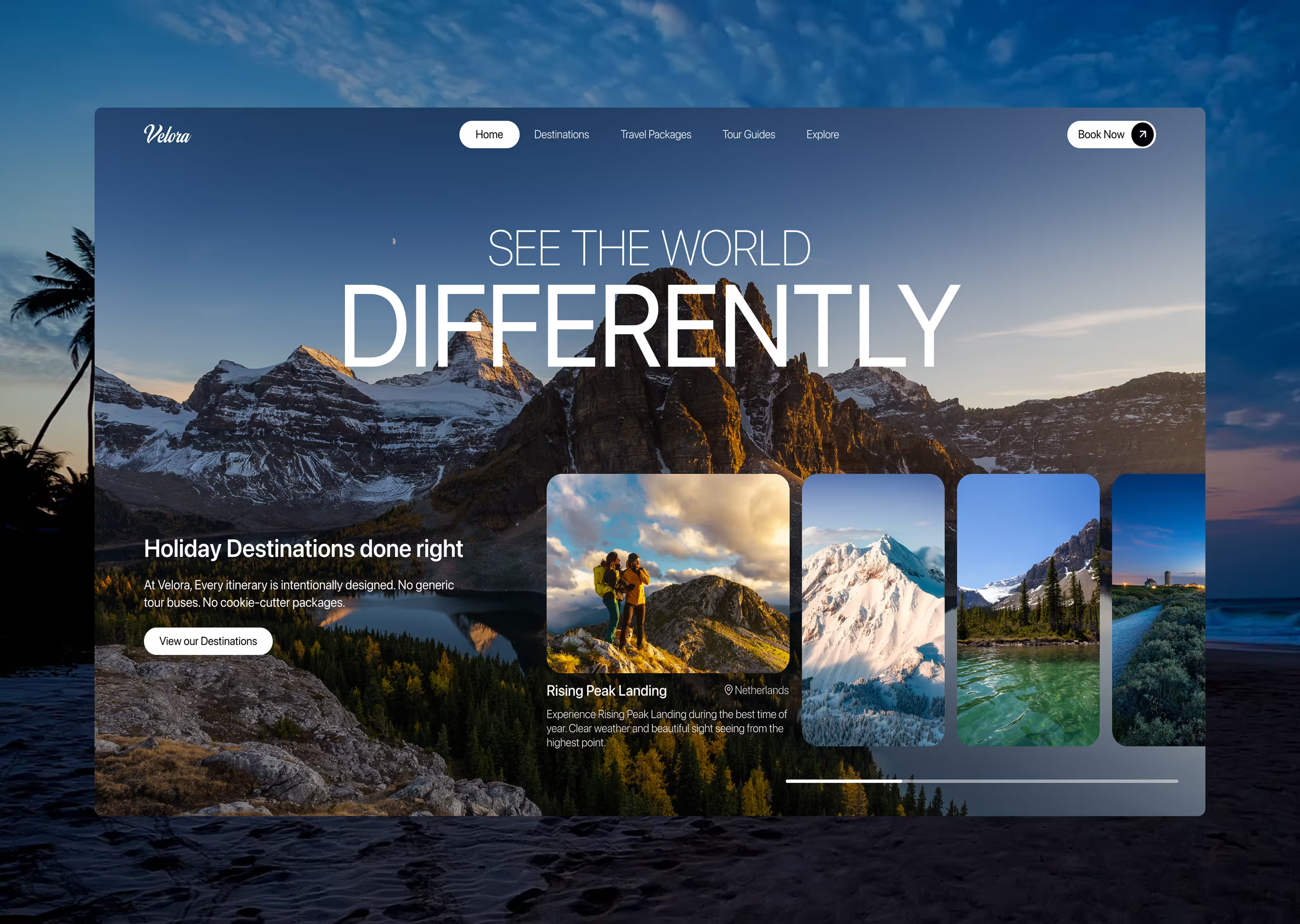
Your brand guidelines should also explain what kind of visuals belong to the brand.
That could be photography, illustration, icons, patterns, textures, diagrams, product images, people shots, location imagery, or abstract graphics.
The key question is simple: What should this brand feel like visually when there isn’t a logo on the page?
If your imagery is random, your brand starts feeling random too. And random doesn't just mean every image is different.
A useful image section should explain what to use and what to avoid. For example, are photos clean and premium? Candid and human? Technical and precise? Warm and local? Bold and colourful? Minimal and restrained?
This is also where you show examples. Good examples matter because “professional imagery” can mean ten different things depending on who’s reading it.
Tone of voice
Brand guidelines shouldn’t just cover visuals. They should also explain how the brand sounds.
Your tone of voice section helps people write in a way that feels like the business. It doesn’t need to become a 40-page copywriting manual, but it should give your team a clear sense of language, attitude and boundaries.
For example:
- Are you direct or soft?
- Casual or formal?
- Technical or plain-English?
- Bold or careful?
- Warm or restrained?
- Opinionated or neutral?
It should also include words or phrases the brand uses, words it avoids, and a few examples of before-and-after copy.
This is especially useful when multiple people write for the business. Website copy, tenders, emails, ads and social posts should sound related, even if different people are writing them.
Messaging basics
Tone is how the brand sounds. Messaging is what the brand needs to say.
Your brand guidelines should explain the core points the business needs to communicate clearly and consistently.
That might include:
- what the business does
- who it’s for
- what problem it solves
- what makes it different
- key value messages
- short business descriptions
- service descriptions
- tagline or positioning line
- proof points or credibility statements
This doesn’t mean every sentence has to be copied and pasted forever but it means the team has a shared starting point.
Layout and design rules
This section gives people guidance on how brand elements should be arranged.
It might include rules around spacing, grids, content blocks, button styles, image placement, document layouts, social post structure, proposal covers, section headings or common page patterns.
This is where the brand becomes more than colours and fonts.
Layout rules help the brand feel consistent across different formats. A proposal doesn’t need to look exactly like a website page, but if it follows the guidelines it'll feel like it comes from the same business.
Templates and common applications
This is one of the most useful parts, and a lot of businesses skip it.
Guidelines are good. Templates are better.
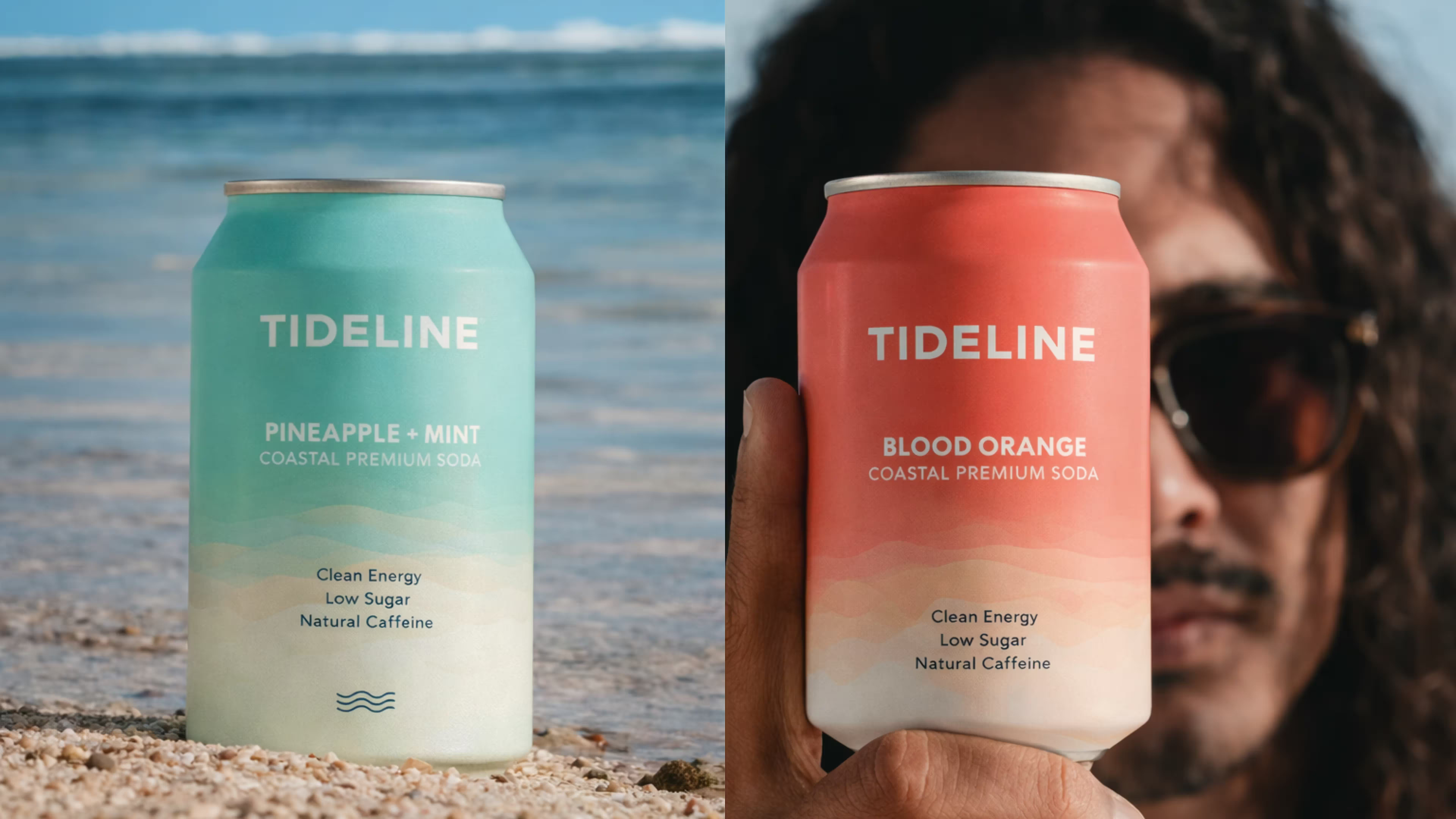
Your brand guide should show how the brand works in the places people actually use it. That includes:
- proposal or tender templates
- social post templates
- email signatures
- presentation decks
- business cards
- letterheads
- ads
- brochures
- case studies
- website sections
- quote documents
- signage examples
This is where the guidelines become practical.
The parts businesses usually forget
Most brand guides will cover the really obvious stuff like your logo, colours, fonts.
But the parts that usually make guidelines actually useful are the real-world bits. The situations your team runs into when they’re not sitting in a brand workshop (And when is that really actually happening?), they’re just trying to get something out the door.
This is where a lot of guides fall short. They explain the brand, but they don’t show how to use it.
A useful brand guide needs to include examples. And Not just perfect mockups either - real examples your team will actuallyneed.
It’s one thing to say, “use the brand consistently.” It’s another thing to show what that actually looks like when someone has 20 minutes to create a LinkedIn post or send a proposal to a new lead.
Good guidelines should also tell people where the brand assets live. Which logo file should they use? Where are the current templates? Which fonts are approved? Who signs off anything new? What should they do if they’re not sure?
That sounds basic, but it prevents a lot of wasted time, frustration, and in some form - coffee consumption.
Because brand inconsistency is one of those things that happens gradually or under pressure. That’s how brands fail.
One-page guide or full brand guidelines?
Don't get me wrong, not every business needs a massive brand book.
Some do, but most don’t.
A one-page brand guide can be enough if your brand is simple, your team is small, and only one or two people are creating material. It can cover the essentials: logo, colours, fonts, tone, and a few basic rules.
But once your brand is being used across a website, ads, documents, social posts, sales decks, templates and contractors, a one-page guide probably won’t go far enough.
At that point, you need more than a reference sheet. You need a system.
The question becomes: how much direction does your team need to use the brand properly without guessing?
If the brand is simple and tightly controlled, keep the guide lean.
If the brand is used by multiple people, across multiple touchpoints, with real commercial pressure behind it, make the guide more practical and detailed.
There’s no prize for having a 60-page document no one opens. But there’s also no point having a one-page guide if your team still doesn’t know what to do with it.
Good guidelines save time, not just protect design
Without clear guidelines, every new piece of marketing becomes a mini design project and it adds up really quickly.
It usually lands on the same people. The marketing person. The business owner. The designer. Whoever cares enough to stop things going out looking wrong.
And that’s not a good system.
Good guidelines reduce the amount of thinking needed for repeat tasks. They give people a starting point. They stop the same decisions being made again and again.
They also make handover easier.
If you bring in a new team member, a contractor, a social media manager, a designer or a web team, you shouldn’t have to explain the brand from scratch every time. The guide should do some of that work for you.
That’s the part businesses often undervalue. A good brand guide doesn’t just protect the look. It protects your time, your consistency, and the quality of what gets sent out under your name.
The real-world brand use checklist
Before deciding what your brand guidelines need to include, ask how the brand is actually used.
Start here:
Who actually needs to use the brand?
If it’s just one person, you might get away with a lighter guide.
If staff, contractors, agencies, designers, salespeople, admin staff or partners need to use it, the rules need to be clearer. Otherwise, everyone starts building their own version of the brand.
Where does the brand show up most often?
Your website is one place.
But what about in other documents? Social posts? Sales decks? Ads? Email signatures? Quotes? Brochures? Case studies?
The more places your brand shows up, the more useful your guidelines need to be.
What keeps getting recreated from scratch?
If your team keeps rebuilding proposals, social graphics, pitch decks or document layouts every time, your brand system isn’t doing enough. Guidelines should reduce that repeated effort.
What mistakes keep happening?
Wrong logo. Wrong colour. Wrong font. Weird spacing. Bad contrast. Random stock images. Off-brand tone. Stretched assets. Old templates still floating around.
If the same mistakes keep appearing, your guide should address them directly.
What assets do people keep asking for?
If people are always asking for the same logo, template, colour code, font, icon, image style or wording, that’s a sign it should be easier to find.
What would make the brand easier to use next week?
This is the practical question.
What would help your team use the brand better next week?
That might be a template. A short tone guide. A folder of approved assets. A clear logo pack. A few examples of good social posts. A proposal layout. A better explanation of what not to do.
Guidelines only work if people can actually use them
A good guideline document that sits in your server or desktop folder doesn’t help much.
It might look great. It might impress people in the handover meeting. But if no one opens it, understands it, or knows how to apply it, it’s not doing its job.
Good brand guidelines need to be easy to find, easy to understand and easy to use.
That means they should be written for the people who actually need them. Not just designers. Not just marketers. Everyone who touches the brand.
Your internal team shouldn’t need a design degree to understand which logo to use. A contractor shouldn’t have to guess which colours are approved. A staff member shouldn’t have to dig through ten folders to find the latest email signature template.
That’s the difference between a brand guide and a brand system. The guide explains the rules, whereas a brand system makes those rules easy to follow.
If your brand guidelines don’t help people make better decisions in the real world, they’re just documentation.
Build a brand system people can actually use
Brand guidelines are there to keep your brand from decaying, and instead be successful.
Think about it, as your business grows the more people touch the brand, you create more assets, you fire out more campaigns, more documents get sent, and it's likely more contractors get involved.
Without clear rules, every one of those touchpoints becomes a chance for the brand to drop off.
That’s how businesses end up looking less consistent, less established and less controlled than they actually are.
The fix isn’t always a full rebrand which some are lead to believe. Sometimes your identity is fine - it just needs a better system around it.
Our brand design service is built around creating identity systems that work in the real world, not just in a presentation. Start there, or reach out to us and we’ll help you work out if you need clearer guidelines, stronger templates, or a wider brand identity system.
Frequently asked questions: