
How Long Does SEO Take in NZ? What Actually Affects the Timeline
If you ask ten SEO agencies how long SEO takes, most will give you the same answer: somewhere between three and six months.
And it's not a wrong answer, but it is also not particularly helpful.
Because the real answer is that SEO timelines vary wildly. Some websites start seeing traction within a few months. Others can spend a year building momentum before results become obvious. Two businesses can invest the same effort into SEO at the same time and end up with completely different outcomes.
That difference usually comes down to something most explanations skip over: search authority.
Search engines do not rank websites simply because they exist or because someone “did SEO”.
They rank websites they trust. And trust is built gradually through signals such as relevance, content depth, and credibility within a topic.
So the better question is not just “how long does SEO take?”. It is how long it takes your particular website to earn enough authority to compete in search results?
Understanding that difference is the key to setting realistic expectations and avoiding the common trap many businesses fall into: expecting SEO to behave like paid advertising.
Who This Guide Is For
This article is written for business owners who are considering SEO or have recently started investing in it and want to understand what a realistic timeline looks like.
If you are wondering things like:
- when rankings should start moving
- when traffic should increase
- when SEO should start producing leads
then this guide will help clarify what normally happens and what factors influence how quickly results appear.
We will walk through what typically happens during the first months of SEO, the factors that can accelerate or slow progress, and the early signals that indicate whether your strategy is heading in the right direction.
The Short Answer: SEO Usually Takes 3-6 Months to Show Movement
As we said before - most websites begin to see some level of movement in search rankings within three to six months of consistent SEO work.
That movement might look like:
- pages beginning to appear in search results
- rankings improving for lower competition keywords
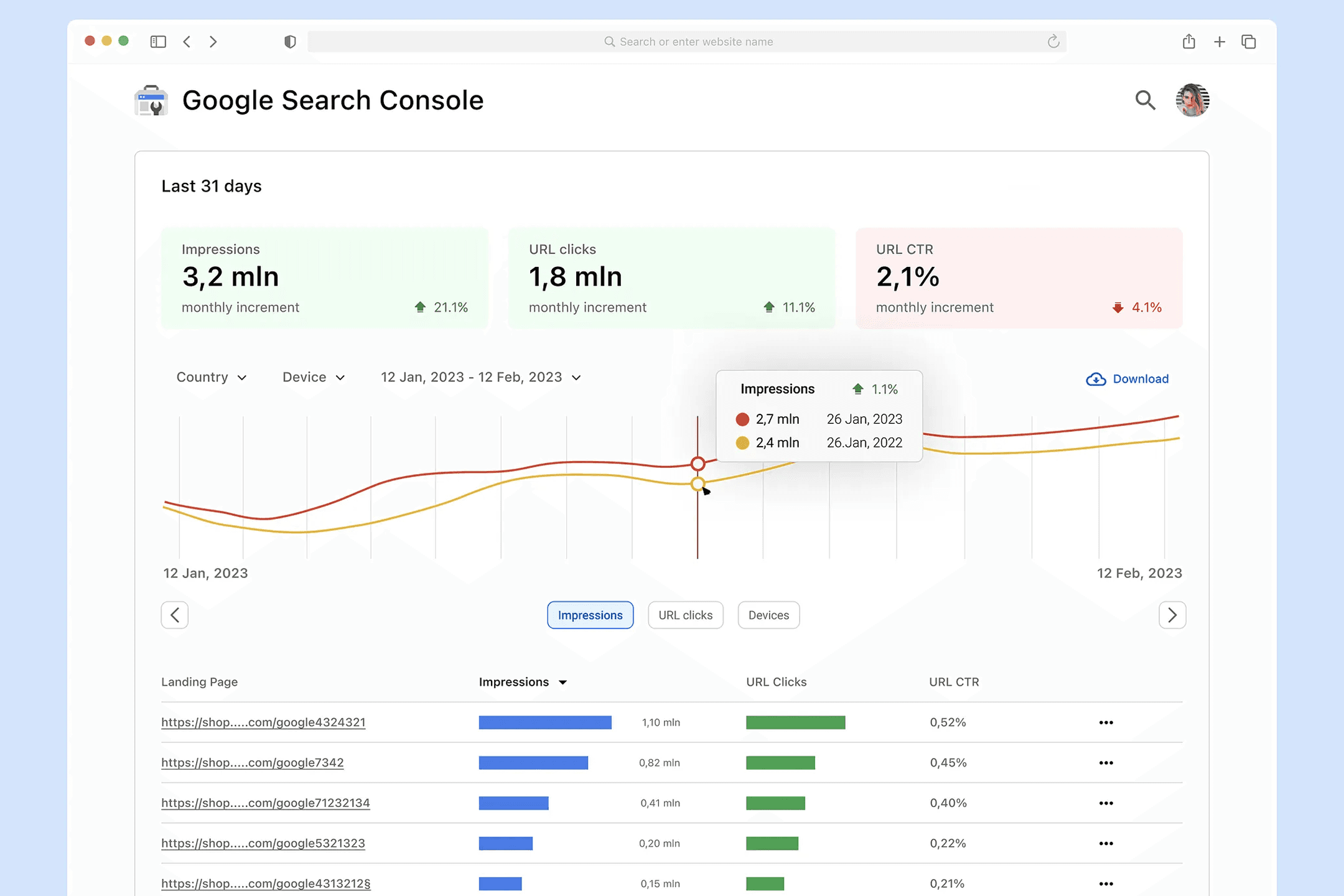
- impressions increasing in Google Search Console
- early growth in organic traffic.
But this early movement is not the same as meaningful commercial results.
For many businesses, the first six months of SEO are about building the foundations that allow growth to happen later. Rankings may improve gradually during this time, but the real acceleration comes once a website begins to accumulate authority within its topic.
Google itself notes that changes to websites can take anywhere from a few hours to several months to be reflected in search results, depending on how quickly pages are crawled, indexed, and evaluated within the broader search ecosystem. That is why SEO is usually measured over months rather than days.
This also explains why some businesses see traction quickly while others take longer. SEO performance is not determined only by the work you start today. It is heavily influenced by the position your website was already in when that work began.
Why SEO Takes Time in the First Place
The reason SEO takes time is simple but it's always misunderstood.
Search engines (Like Google) are trying to decide which pages deserve to appear at the top of a search result. That decision is not made instantly, and it is not based on a single factor.
When someone searches for something in Google, the search engine evaluates thousands of pages and attempts to determine which ones are the most helpful, relevant, and trustworthy for that query. To do that, Google relies on hundreds of signals that indicate how credible a page and a website are within a topic.
Some of those signals include things like:
- how well the content answers a search query
- how other websites reference or link to it
- how users interact with the page
- how established the website is within that subject area.
All of this contributes to what is often referred to as search authority.
Authority is not something that appears overnight. It is accumulated over time as search engines observe how a website performs, how it grows its content, and how it fits within the broader ecosystem of websites covering the same topics.
That process is also influenced by technical realities. Search engines must first discover pages, crawl them, analyse their content, and then compare them against other pages targeting similar searches. Google itself explains that changes to a website may take anywhere from hours to several months to be reflected in search results depending on crawling and indexing cycles. (Google Search Central)
In other words, SEO is not simply about making changes to a website. It is about gradually building enough relevance and trust for search engines to move your pages upward relative to competing pages.
This is also why SEO can feel slow at the beginning. The early stages are often about laying the groundwork that allows later growth to happen.

What Actually Happens During the First 6 Months of SEO
While every website is different, most SEO projects follow a broadly similar progression during the first several months.
Understanding that progression helps explain why immediate results are rare and why patience is usually required early on.
Month 1-2: Diagnosis and Infrastructure
The first stage of SEO is rarely about rankings.
Instead, it focuses on identifying structural problems and improving the foundations of the website so search engines can properly understand and evaluate it.
Typical work during this stage includes:
- analysing the website’s current search visibility
- identifying technical issues affecting crawlability or indexing
- researching search demand and keyword opportunities
- improving site structure and internal linking
- aligning page content with relevant search queries.
For many websites, these changes alone can produce small ranking improvements, particularly if the site previously had significant technical issues. But the main goal during this stage is preparation rather than immediate growth.
Month 3-4: Indexation and Early Ranking Signals
Once structural improvements are in place and new or improved content begins to appear, search engines gradually start reassessing the website.
During this period it is common to see:
- new pages entering the search index
- small ranking movements for lower competition keywords
- an increase in impressions within Google Search Console
- occasional early traffic from long-tail searches.
These signals can be small but they often indicate that the site is beginning to gain relevance for its targeted topics.
Month 5-6: Competitive Movement
By this point, the cumulative effect of technical improvements, content development, and early authority signals often begins to show more noticeable movement.
Typical changes during this stage include:
- rankings improving for mid-competition keywords
- steady increases in organic impressions
- more consistent organic traffic
- early lead or enquiry activity for some businesses.
Not every site will experience dramatic growth at this stage, particularly in highly competitive industries. But this is often the point where the groundwork laid earlier begins to translate into measurable progress.
The important thing to understand is that SEO growth tends to be incremental rather than immediate. Momentum builds gradually as search engines gain confidence in the website and its content.
That momentum is also why SEO often becomes significantly more powerful after the first six to twelve months. Once a site begins to establish authority in its subject area, each new piece of content and each improvement to the site tends to produce stronger results than it would have earlier in the process.
The Five Factors That Change SEO Timelines
If SEO usually takes months to gain traction, the obvious next question is why some businesses see results faster than others.
The answer is always easy because it's not determined by a single factor. They are shaped by a combination of conditions that influence how quickly a website can build authority and compete within search results.
Five factors tend to have the largest impact.
1. Competition Within Your Industry
Search rankings are always relative.
If you operate in a market where dozens of established businesses have been investing in SEO for years, it naturally takes longer to break into those rankings. Those websites already have content depth, backlinks, and domain authority built up over time.
On the opposite side, industries with lower search competition can move much faster. A well-structured website with strong content can begin ranking within months simply because there are fewer authoritative competitors occupying those positions.
This is why SEO timelines vary so much between industries. Ranking for a niche local service can happen relatively quickly, while ranking for highly competitive national keywords may take significantly longer.
2. Existing Domain Authority
The starting position of your website matters more than most people realise.
A brand new website begins with very little trust from search engines. It has no historical content performance, no established authority within its topic, and often very few external references from other websites.
An established website, on the other hand, may already have:
- historical search data
- backlinks from other websites
- content that search engines recognise.
Because of this existing trust, improvements to an established site often produce results more quickly than the same work applied to a brand new domain.
3. Technical Health of the Website
Even strong content can struggle to rank if the underlying website structure makes it difficult for search engines to crawl or understand.
Common technical issues that slow SEO progress include:
- pages that are difficult for search engines to index
- poor site architecture
- slow loading pages
- duplicate or thin content.
Resolving these issues can massively improve how search engines evaluate a website, but identifying and fixing them takes time and careful analysis.
4. Depth and Quality of Content
Search engines aim to rank the pages that provide the most helpful and comprehensive answers to a search query.
A website with only a handful of pages covering a topic will struggle to compete against another site that has built a large, interconnected body of content around that subject.
Building topical authority often requires expanding the depth of information available on a website. That may involve improving existing pages, creating new content that answers related questions, and structuring that content so search engines can clearly understand the relationships between topics.
This is one reason SEO growth tends to accelerate over time. As a website expands its content coverage, it becomes increasingly relevant for a wider range of searches.
5. Consistency of SEO Work
SEO rarely works well as a one-off project.
Search engines reward websites that continue improving their content, structure, and authority over time. Businesses that treat SEO as an ongoing process tend to build momentum steadily.
On the other hand, websites that implement a few changes and then stop will see slower or inconsistent results.
Consistent improvements allow a website to compound its authority. Each new page, each optimisation, and each signal of credibility strengthens the overall position of the domain within search results.
Why Some Websites Grow Faster Than Others
When you combine the reasons above it becomes easier to understand why SEO timelines can differ so dramatically between businesses.
Imagine two companies starting SEO at the same time.
- The first company has a brand new website with very little content. Its industry is highly competitive, and several well-established competitors have been producing authoritative content for years.
- The second company has operated for a decade and already has a website with hundreds of pages of content. Some of those pages already rank moderately well, but the site has never had a structured SEO strategy.
Even if both businesses invest in the same SEO effort, the second company is much more likely to see results much faster.
That is because it is not starting from zero. Search engines already recognise the domain, understand its topic, and have historical data about how its pages perform.
For the newer website, the first phase of SEO involves establishing credibility. For the established website, the first phase may simply involve refining and expanding what already exists.
This difference in starting position is one of the biggest reasons SEO timelines are so difficult to generalise.
It also explains why the most useful question is not “how long does SEO take?” but rather how long it will take for your website to become competitive within your specific market.
Understanding that starting position is usually the first step in setting realistic expectations.
What Are The Signs Your SEO Is Working (Before Rankings Explode)?
One of the biggest reasons businesses abandon SEO too early is that they are looking for the wrong signals.
Most people expect SEO progress to show up as sudden jumps in traffic or rankings. But in reality, the early stages of SEO tend to produce small signals that gradually build into larger results.
Understanding these signals can help you determine whether your SEO strategy is heading in the right direction before major ranking improvements appear.
One of the earliest indicators is an increase in search impressions. In tools like Google Search Console, impressions represent how often your pages appear in search results, even if users do not click them yet. As a website begins to gain relevance for a topic, impressions often increase before clicks or traffic do.
Another early signal is long-tail keyword movement. These are more specific search queries with lower competition. As search engines start recognising your content, it is common to see pages rank for these longer and more niche phrases first.
Over time, this visibility expands to more competitive keywords.
You may also begin to see new pages being indexed more quickly. When search engines repeatedly crawl and index your site, it suggests they are more actively monitoring changes and updates.
Gradual improvements in click-through rates can also indicate progress. If pages begin appearing higher in search results, even small ranking improvements can lead to more users choosing to click your listing.
None of these signals are dramatic on their own, but together they show that search engines are gaining confidence in your website.
SEO progress often resembles a slow climb rather than a sudden jump. Early signals appear first, then rankings begin improving, and eventually those improvements translate into consistent traffic and enquiries.
When SEO Appears to Be Failing
Even when SEO work is being done correctly, there are situations where progress can appear slow or confusing.
Understanding these scenarios helps prevent businesses from abandoning a strategy that is actually moving in the right direction.
One common situation occurs when rankings improve but leads do not increase. This can happen if the keywords attracting traffic are of the informational type rather than the commercial type, or if the website does not convert visitors effectively once they arrive.
In these cases the problem is not necessarily SEO itself. It may be the alignment between search intent and the content on the page.
Another scenario is when traffic increases but the visitors are not relevant to the business. This sometimes happens when a website begins ranking for broader topics that attract curiosity rather than genuine buying intent.
Adjusting the content strategy to focus on more commercially relevant searches often resolves this issue.
There are also situations where rankings stall completely. This can occur when a website has improved its fundamentals but still lacks the authority needed to compete against stronger competitors.
In these cases the strategy may need to expand into deeper content coverage, stronger topical authority, or improved credibility signals from other websites.
The key point is that SEO rarely fails instantly. More often, it reveals underlying weaknesses in a website’s structure, content, or positioning within its market.
Addressing those weaknesses is usually what unlocks the next stage of growth.
How SEO and Google Ads Work Together
When businesses ask how long SEO takes, the question often comes from a practical place. You're wanting visibility now, but you also want sustainable growth in the long run.
This is where SEO and Google Ads can complement each other rather than compete.
Google Ads provides immediate visibility. Once a campaign is launched, ads can appear at the top of search results almost instantly. For businesses that need enquiries quickly, this can be extremely valuable.
SEO, on the other hand, builds long-term organic visibility. Instead of paying for each click, your website earns its position in search results over time as authority grows.
Using the two channels together often produces stronger results than relying on either one alone.
In the early stages of marketing, Google Ads can generate traffic and enquiries while SEO work is building momentum in the background. This allows a business to remain visible in search while organic rankings gradually improve.
At the same time, advertising data can actually improve SEO strategy. Paid search campaigns reveal which keywords generate enquiries, which messages attract clicks, and which landing pages convert best. That insight can then inform content development and optimisation on the organic side.
Over time, as SEO begins generating consistent organic traffic, the business may rely less on paid advertising for the same searches. Instead of replacing Ads entirely, the two channels often work best as a balanced strategy where paid visibility supports immediate opportunities while SEO builds sustainable growth.
This combination approach is one reason many businesses treat SEO as a long-term investment rather than a quick fix.
What to Do If You Want Faster SEO Results
While SEO naturally takes time, there are ways to improve how quickly progress happens.
The most effective strategies focus on removing barriers that slow search engines from understanding and trusting your website.
One of the first priorities is ensuring the website’s technical foundation is sound. Search engines must be able to crawl pages easily, understand their structure, and index them properly. Issues with indexing, page speed, or site architecture can significantly slow progress even if the content itself is strong.
Another important step is focusing on achievable search opportunities first. Instead of immediately targeting the most competitive keywords in an industry, many successful SEO strategies begin with lower-competition searches that are easier to rank for. These early wins help build authority and provide signals that strengthen the entire website.
Content depth also plays a major role. Websites that build a clear and comprehensive body of content around their core topics tend to gain authority faster than those publishing isolated pages. When search engines see multiple high-quality pages covering related subjects, they gain confidence that the website is a credible source within that field.
Finally, consistency is critical. SEO tends to compound when improvements are made regularly rather than sporadically. Gradual improvements to content, structure, and authority signals accumulate over time and allow the website to strengthen its position within search results.
These steps do not eliminate the time required for SEO to work, but they can significantly influence how quickly momentum begins to build.
The Real Question: Is Your Website Positioned to Rank?
At the start of this guide we asked how long SEO takes.
The reality is that the timeline depends less on the concept of SEO itself and more on the starting position of your website.
A business entering a competitive market with a brand new website may need time to establish credibility and authority before rankings improve significantly. Another business with an established domain and strong content foundation may see progress much more quickly once a structured SEO strategy is introduced.
Because of this, the most useful first step is understanding where your website currently stands.
Looking at factors such as competition, technical health, existing content, and domain authority can reveal whether growth is likely to happen quickly or whether a longer build-up phase is required.
If you want a clearer view of how your website compares within your market, you can explore our search engine optimisation services to see how we approach SEO strategy and long-term growth. We also have a free website health analysis tool that can help identify quick wins.
And if you would like a realistic assessment of how SEO could work for your business and what kind of timeline to expect, you can book a consultation and we can walk through your website and competitive landscape together.
Understanding your starting position is usually the most reliable way to answer the question that brought you here in the first place.
Frequently asked questions: