
What Is Conversion Rate Optimisation (CRO)?
The Real Problem Most Websites Have
Most businesses assume their website has a traffic problem.
If they could just get more visitors, more leads would follow. More enquiries. More sales.
So they invest in SEO, paid ads, social media campaigns, and content marketing to drive people to their site.
But when those visitors arrive, something strange happens.
They leave.
A typical website might receive 1,000 visitors in a month and generate only 20 enquiries. The remaining 980 people browse briefly, hesitate, and disappear without taking any action.
That isn’t a traffic problem. It’s a conversion problem.
In other words, the website isn’t turning interest into action. Visitors arrive curious, but something about the experience creates friction. The message may be unclear, the offer may feel uncertain, or the path to taking the next step may simply not be obvious.
This is where conversion rate optimisation comes in.
Instead of chasing more traffic, CRO focuses on improving how effectively a website converts the traffic it already receives. Small improvements in conversion performance can dramatically increase enquiries, sales, and revenue without increasing marketing spend.
Before diving into how that works, it helps to understand the simple definition most people start with.
Before we continue...
We understand that sometimes you're just looking for a quick answer and these posts can take a while to sift through. If you're wanting someone to talk to you can reach out and ask questions here or find out more about CRO here. Otherwise - Happy reading!
Conversion Rate Optimisation: The Face-Value Definition
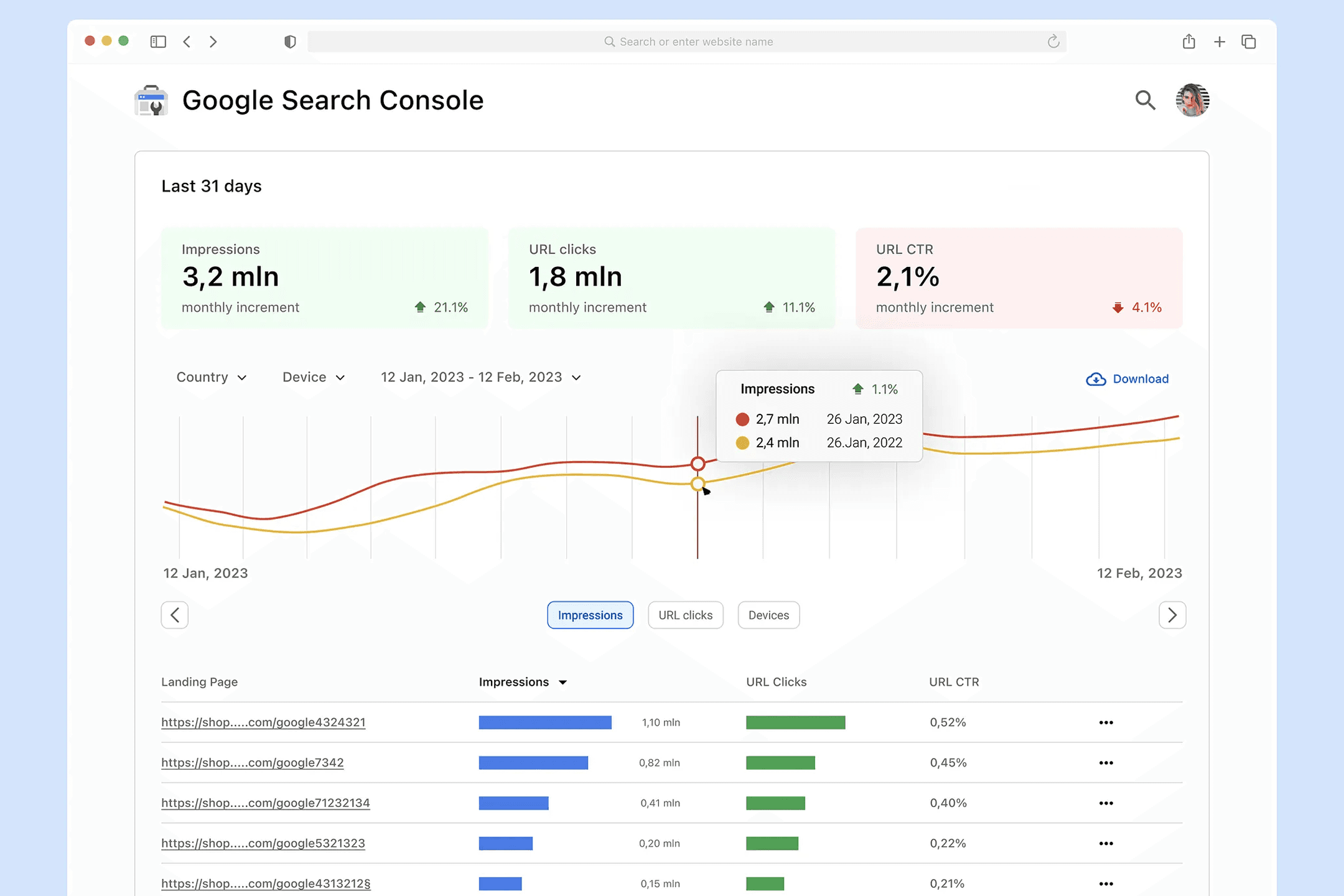
At its simplest, conversion rate optimisation (CRO) is the process of increasing the percentage of website visitors who complete a desired action.
That action is called a conversion.
Depending on the type of website, a conversion might include:
- purchasing a product
- filling out an enquiry form
- booking a consultation
- requesting a quote
- signing up to a newsletter
If a website receives 1,000 visitors and 30 of them complete one of these actions, the website has a 3% conversion rate.
The formula is straightforward:
At face value, conversion rate optimisation simply means improving that percentage. A business might aim to increase a 3% conversion rate to 4% or 5% by making improvements to their website.
If you’re curious about how your own website performs, running a quick analysis can provide useful insight. Tools like our Free Website Health Checker can identify common issues that prevent websites from converting effectively.
But this textbook definition only scratches the surface.
Because in practice, conversion rate optimisation isn’t really about percentages at all.
It’s about understanding why people hesitate, where they get stuck, and what prevents them from taking the next step.
And that’s where the real work of CRO begins.
What Conversion Rate Optimisation Actually Is
The actual definition of conversion rate optimisation makes it sound simple: increase the percentage of visitors who take action.
But that definition hides the real work.
Many businesses hear the term CRO and assume it means tweaking design elements, testing button colours, or experimenting with headlines. And while those tactics do exist, they are not the core of conversion optimisation.
In reality, conversion rate optimisation is the discipline of diagnosing and removing friction in the customer journey.
Every visitor who arrives on a website is trying to answer a small series of questions:
- What does this business do?
- Is this relevant to me?
- Can I trust them?
- What should I do next?
If the website answers those questions clearly and confidently, visitors move forward.
If it doesn’t, they hesitate. And that hesitation is where conversions are lost.
Sometimes the friction is obvious. A form might ask unnecessary details, a page might load slowly, or the call to action might be difficult to find.
The friction is usually quite subtle. Visitors might feel uncertain about pricing, confused about the offer, or unsure whether the business is credible enough to trust.
When those doubts appear, people simply leave. Unfortunately if this is you - there's better options for consumers out there and they know it.
CRO focuses on identifying those points of hesitation and removing them. Instead of guessing what might improve conversions, optimisation work looks at how real visitors behave.
It finds answers to questions like:
- Where do users abandon the page?
- Which parts of the website attract attention?
- Which sections are ignored?
- At what step do people stop moving forward?
By analysing behaviour and testing improvements, CRO gradually reduces the friction that prevents visitors from converting.
Over time, this creates a website that guides people more naturally from interest to action.
Why Most Websites Convert Poorly
Most websites do not fail because the business is bad. They fail because the website experience makes decision-making harder than it should be.
When visitors land on a page, they are constantly evaluating whether the next step is worth taking. Even at a subconscious level.
If the experience feels confusing, uncertain, or overwhelming, they just leave and continue their search elsewhere.
This is why many websites convert poorly even when they receive steady traffic.
Here's some of the more common issues we've seen that tend to appear again and again:
Unclear messaging
Visitors should be able to understand what a business does within seconds of arriving on the site.
If the headline is vague or the offer is buried beneath marketing language, people struggle to understand whether the service is relevant to them. That uncertainty already puts you on the backfoot.
Too much cognitive load
Websites sometimes overwhelm visitors with too many choices, links, or competing messages.
When people are presented with too many decisions at once, they slow down or stop altogether. Clear structure and guidance are essential for helping visitors move through a page with confidence.
Lack of trust signals
Scams are everywhere nowadays. So before taking action, most visitors look for signals that a business is credible.
Testimonials, case studies, recognisable clients, and clear contact details all contribute to building trust. When these signals are missing, visitors hesitate to submit enquiries or make purchases.
Weak calls to action
Even when visitors are interested, they still need clear direction.
If the website does not clearly guide them toward the next step such as requesting a quote, booking a consultation, or making a purchase they may simply leave without acting.
Poor user experience
Navigation issues, slow pages, confusing layouts, or difficult forms all introduce friction into the customer journey.
Each small frustration increases the likelihood that a visitor will abandon the process.
Individually, these issues might seem minor. But together they create a website that quietly pushes potential customers away.
This is exactly what conversion rate optimisation aims to fix.
Instead of focusing only on attracting new visitors, CRO works to repair the experience that those visitors encounter once they arrive.
Why Conversion Rate Optimisation Matters More Than Traffic
Most businesses focus heavily on getting more traffic to their website.
They invest in SEO, paid advertising, social media campaigns, and content marketing to attract new visitors. While traffic is important, it only tells half the story.
What really determines whether a website produces enquiries or sales is how effectively it converts the visitors it already receives.
To see why this matters, consider a simple example.
Imagine two businesses that both receive 1,000 visitors per month.
- Website A1,000 visitors2% conversion rate20 enquiries
- Website B1,000 visitors4% conversion rate40 enquiries
Both websites attract exactly the same amount of traffic. The only difference is how effectively they convert visitors into leads.
Yet Website B generates twice as many enquiries without spending an extra dollar on marketing.
This is why conversion rate optimisation can have such a powerful impact on business growth. Improving conversion performance increases the return on every marketing channel. Image what you could do with twice as many enquiries?
SEO becomes more profitable.Paid advertising produces more leads.Email campaigns generate more responses.But CRO improves the performance of the traffic you already have.
In many cases, this produces the highest return on investment in digital marketing, because the improvements compound across every source of traffic.
A website that converts well turns marketing into a predictable system. One that converts poorly turns marketing into an expensive guessing game.

What Is a Good Conversion Rate?
One of the most common questions businesses ask after learning about CRO is simple: What is a good conversion rate?
The honest answer is that conversion rates vary widely depending on the type of website, the industry, and the action being measured.
For example, ecommerce websites typically see different conversion patterns compared with service businesses or lead generation websites.
Across many industries, however, websites often convert somewhere between 2% and 5% of visitors. In other words, out of 100 people who visit a site, only two to five might complete a meaningful action such as submitting an enquiry, making a purchase, or booking a consultation.
That number can feel surprisingly low.
But it highlights an important reality of online behaviour: most visitors are still researching, comparing options, or simply exploring. Only a small percentage are ready to act immediately.
This is why even modest improvements in conversion performance can have a significant impact.
Imagine a website that receives 2,000 visitors per month and converts at 2%. That produces roughly 40 enquiries.
If improvements to messaging, structure, and user experience increase that conversion rate to 4%, the same traffic suddenly produces 80 enquiries.
No additional advertising.No additional traffic.
Just a website that works more effectively.
It’s also important to understand that conversion rate alone doesn’t tell the full story. A site that attracts highly qualified visitors might convert at a much higher rate than a site receiving broader, less targeted traffic.
This is why CRO focuses less on chasing a specific percentage and more on improving the experience for real visitors.
The goal isn’t simply to reach an industry benchmark.
The goal is to remove the friction that prevents interested visitors from taking the next step.
What Conversion Rate Optimisation Actually Involves
When people first hear about CRO, they often imagine a series of random experiments - Testing button colours. Changing headlines. Moving forms around.
In reality, effective conversion optimisation follows a structured process.
The goal is not to guess what might work. It is to understand how visitors behave, identify where they hesitate, and then systematically improve the experience.
Most CRO work follows a process that looks something like this.
Behaviour analysis
The first step is understanding how visitors interact with the website.
Analytics tools reveal which pages attract traffic, how long people stay, and where they drop off. Heatmaps and session recordings can show where users click, scroll, and lose interest.
This behaviour data highlights the areas where friction might exist.
Conversion funnel analysis
Next, the entire customer journey is examined.
From the moment a visitor arrives on the site to the moment they complete an action, every step of the process is mapped out. Pages with unusually high drop-off rates often indicate problems with messaging, layout, or trust.
Hypothesis development
Once friction points are identified, optimisation specialists develop hypotheses about what might improve the experience.
For example, simplifying a form, clarifying an offer, or strengthening credibility signals may reduce hesitation and increase conversions.
Experimentation
Changes are then tested to see whether they actually improve results.
Sometimes this involves structured A/B testing. In other cases, it simply means implementing improvements and measuring the impact over time.
Iteration
CRO is not a one-time project.
As new insights appear, further improvements are made. Over time, these incremental changes compound and lead to significant improvements in conversion performance.
For businesses that want a quick snapshot of where their website may be struggling, running a basic audit can reveal many of these issues. Tools like our Website Health Checker can highlight common structural problems that prevent websites from converting effectively.
But identifying the issues is only the beginning.
The next step is understanding whether your website is actually suffering from a conversion problem in the first place.

How to Tell If Your Website Has a Conversion Problem
Many businesses assume their website is performing reasonably well simply because it receives steady traffic.
Visitors arrive. People browse a few pages. The analytics dashboard shows activity.
But activity does not necessarily mean the website is working.
In many cases, websites generate plenty of interest yet struggle to turn that interest into enquiries, bookings, or sales. The problem often only becomes visible when you start looking at the behaviour behind the numbers.
Several signals tend to indicate that a website has a conversion problem.
High traffic but very few enquiries
One of the clearest signs is when a website attracts visitors but generates very little business.
If hundreds or thousands of people visit a site each month yet only a small handful submit enquiries, request quotes, or make purchases, something in the experience is preventing people from taking the next step.
High bounce rates
A bounce occurs when a visitor lands on a page and leaves without interacting further.
While some bounce behaviour is normal, consistently high bounce rates often suggest that visitors are not finding what they expected when they arrive.
The messaging may be unclear, the page may load slowly, or the offer may not match the visitor’s intent.
Visitors browse but don’t act
Another common pattern is when users move through several pages but never complete an action.
This behaviour often signals hesitation rather than disinterest. Visitors are exploring the site because they are curious, but something about the experience prevents them from committing.
That friction might come from unclear pricing, weak trust signals, confusing navigation, or an unclear value proposition.
Abandoned forms
Forms are one of the most common conversion points on service websites.
When visitors start filling out a form but abandon it before submitting, the form itself may be introducing friction. It could be too long, request unnecessary information, or feel like too much effort for the perceived value of the enquiry.
Short session durations
If visitors consistently leave within a few seconds, it often means the page failed to communicate its relevance quickly enough.
People make fast decisions online. If they cannot immediately understand what the business offers and why it matters, they simply return to search results and continue looking elsewhere.
Individually, these signals might seem small.
But when they appear together, they usually point to the same underlying issue: the website experience is making decisions harder than they need to be.
Running a quick technical and structural review can often reveal these problems surprisingly quickly. If you're curious about how your own website performs, our Website Health Checker can highlight common issues that affect usability, performance, and conversion potential.
Once these issues become visible, the path forward becomes much clearer.
Because improving conversions usually doesn't require rebuilding the entire website.
It requires identifying the friction that already exists and removing it.
What To Do Next
If your website receives traffic but struggles to generate enquiries or sales, the issue is rarely a single technical problem.
More often, it’s a combination of small obstacles that collectively create hesitation for visitors.
Conversion rate optimisation focuses on identifying those obstacles and systematically improving the experience so that visitors can move naturally from interest to action.
For some businesses, this may involve clarifying messaging or improving page structure. For others, it may require deeper analysis of user behaviour and targeted improvements to key conversion points across the website.
If you'd prefer a deeper evaluation, you can also explore our Conversion Rate Optimisation services, where we analyse user behaviour, identify friction points, and implement improvements designed to increase enquiries and sales.
And if you'd like to talk through your website directly, you can always get in touch with our team. We’re happy to review your site and point you in the right direction.
Because in most cases, improving conversions isn’t about attracting more visitors.
It’s about making it easier for the right visitors to take the next step.
Frequently asked questions: